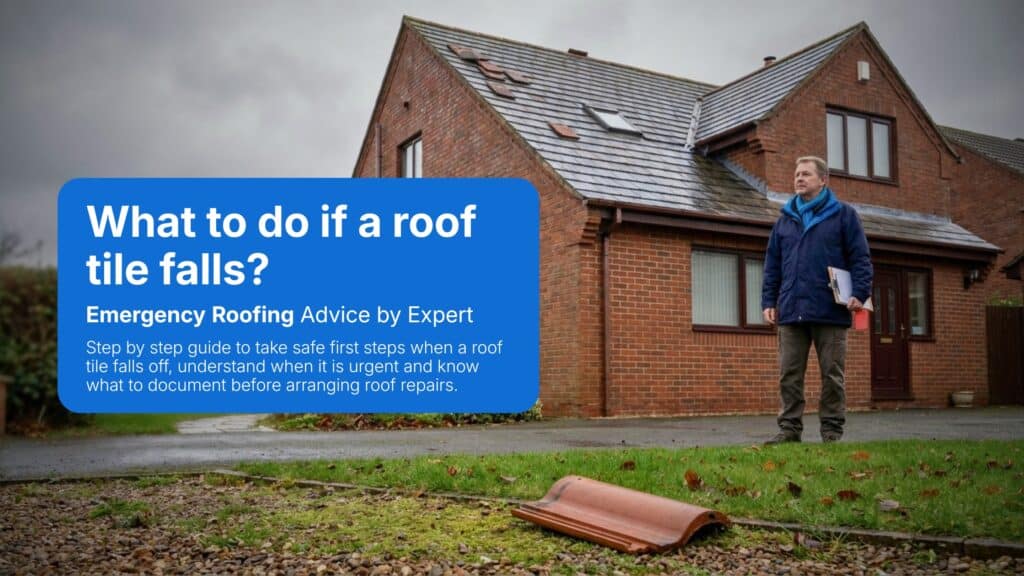
Finding a roof tile or slate on the ground can be unsettling—particularly after strong winds, heavy rain or a sudden change in weather. The good news is that the first steps are simple: keep people clear, avoid climbing onto the roof and arrange a proper assessment.
A fallen tile does not automatically mean the whole roof needs replacing. It does mean that the roof covering has been compromised, and it is sensible to understand why the tile came loose and whether nearby tiles or fixings are affected.
1. Keep clear of the area
If the tile has fallen near a doorway, path, driveway or parked vehicle, keep people away from the immediate area. Look up from a safe distance: if other tiles, ridge tiles or roof materials appear loose, do not stand beneath them.
Move vehicles only if it is safe to do so. Do not attempt to catch, push or remove anything that is still loose on the roof.
If there is an immediate risk to people, contact the appropriate emergency service. For a roofing issue without an immediate danger to life, a qualified roofing contractor can assess the property and advise on safe next steps.
2. Do not climb onto the roof
It can be tempting to put a ladder up and replace a tile yourself, particularly if the weather appears settled. However, roofs are slippery, uneven and vulnerable to accidental damage. Without the right access equipment and training, it is easy to create a larger problem or put yourself at risk.
A professional roofer will assess access, the condition of surrounding tiles and the cause of the movement before carrying out work. That matters because the visible missing tile may not be the only issue.
3. Check from ground level and inside the loft
From a safe position, look for obvious signs such as:
- Additional loose, cracked or missing tiles
- Debris in the gutter or on the ground
- Damage around the ridge, verge or chimney
- Water running into the roof space during rain
- Damp insulation, fresh water marks or visible daylight in the loft
Do not walk on loft insulation or roof timbers unless you know it is safe to do so. The purpose of this check is not to diagnose the roof yourself; it is to gather useful information for the inspection.
4. Take photographs and note the timing
Photographs can be useful for the roofer, for your own records and, where relevant, for your insurer. Take images from ground level showing:
- The fallen tile
- The section of roof it may have come from
- Any visible damage
- Interior water marks, if present
- The date and weather conditions if known
Do not edit the images or rely on them as proof of the cause. An insurer will assess claims under the terms of the individual policy. Storm damage is commonly covered by buildings insurance, but normal wear, poor maintenance and pre-existing defects may be treated differently. GOV.UK recovery guidance
5. Reduce further damage only if it is safe
If water is entering the home, move furniture, soft furnishings and valuables away from the affected area where safe. Use containers to catch drips. If water is near electrics, avoid touching switches or fittings and seek appropriate help.
Do not attempt to cover the roof yourself in poor weather or use makeshift fixes that could make access more dangerous. A roofing contractor may be able to install a safe temporary weatherproofing measure before a permanent repair is completed.
When is it an emergency?
A fallen roof tile becomes more urgent when:
- Water is actively entering the home
- There is visible internal damage or a sagging ceiling
- Loose materials could fall onto people or property
- The damage is near electrical fittings
- Significant wind or rain is expected
- Several tiles or ridge tiles have moved
Even when the situation is not an emergency, it is best not to leave a roof opening unattended. A small gap can allow water into the roof layers, particularly during wet or windy conditions.
What should a roofer check?
A proper inspection should not focus only on putting one tile back. It should consider the surrounding roof area, fixings, battens where visible, ridge and verge detail, flashing, gutters and the cause of the problem.
Ask for a written explanation of:
- What has been found
- Whether the repair is temporary or permanent
- What materials are proposed
- Whether other defects have been identified
- What is included in the quoted work
This helps you compare like for like if you obtain more than one quote.
Clear advice before a repair
For homeowners in Darlington, County Durham and the North East, a fallen tile is a reason to seek clear roofing advice—not to panic. The aim is to make the property safe, prevent further water entry and understand whether the issue is isolated or part of wider maintenance needs.
Roofs and Drives LTD can assess roof-tile, slate, ridge, flashing and gutter concerns, then explain the practical next step.