Roofs rarely fail overnight. They give you warning signs for months, sometimes years — and spotting them early is the difference between a cheap repair and a five-figure replacement plus water damage inside. Here’s how to tell, honestly, whether your roof needs replacing or just a repair.
Signs you can spot from the ground
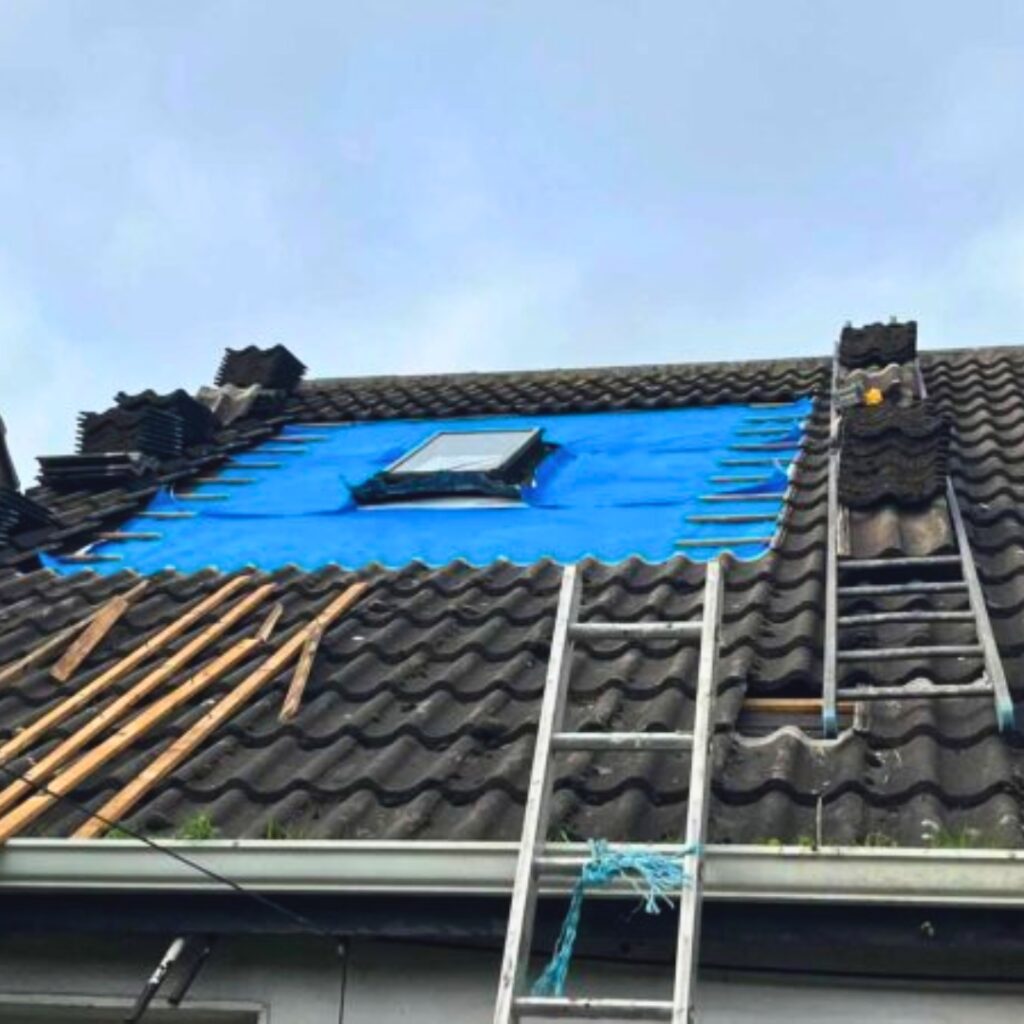
- Slipped, cracked or missing tiles/slates — a few is a repair; widespread slippage suggests failing fixings across the roof;
- A sagging or dipping roofline — a serious sign pointing to structural or timber problems; get it looked at promptly;
- Crumbling mortar along the ridge or verges — very common on older North East roofs, and a classic candidate for a maintenance-free dry ridge upgrade;
- Heavy moss and vegetation — holds moisture against the covering and can hide damage underneath;
- Green streaks, rusted fixings or blocked, sagging gutters — signs water isn’t leaving the roof cleanly.
Signs from inside your loft
- Daylight through the roof boards — if light gets in, so does water;
- Damp patches, staining or a musty smell — water is getting past the covering;
- A torn, sagging or crumbling membrane under the tiles — the old bituminous felt perishes; once it’s gone, the covering is your only defence;
- Wet or springy roof timbers — persistent damp leads to rot, which is far costlier to fix later.
Repair vs replace: the honest rule of thumb
Use this as a guide, and get a professional opinion before spending:
- Lean towards repair if damage is localised, the roof is under ~20 years old, the membrane is sound, and it’s a one-off (e.g. storm damage);
- Lean towards replacement if problems are widespread, the membrane has perished, you’re repairing repeatedly, or the roof is at the end of its material life (concrete tiles ~30–50 years, older felt underlay much less).
There’s no shame in a repair — most of what we do is repairs, and we’ll never sell you a new roof you don’t need. But if the numbers point to replacement, we’ll show you why with photos from your own roof. If you’ve just had a storm, start with our storm damage guide.
What a proper roof survey checks
A good survey isn’t a two-minute glance from the pavement. We check the covering, ridges and verges, flashings around chimneys and junctions, the state of the membrane and battens, the timbers, and the roofline (fascias, soffits, gutters) — then give you an honest written recommendation and, if needed, itemised costs for both repair and replacement.
Don’t wait for the leak
The cheapest time to deal with a roof is before it lets water in. If you’ve noticed any of the signs above, a free survey costs nothing and could save you thousands. We cover Darlington, Newton Aycliffe, Stockton-on-Tees, Middlesbrough, Hartlepool and the wider North East — book yours here, or read our guide to new roof costs if replacement looks likely.
Related guides
- New roof cost in Darlington — budget for a replacement.
- Storm damage roof repairs — what to do after a storm.
- Roof repair service — when a targeted repair is the right call.
Repair or replace — what each route costs (2026)
The decision usually comes down to money, so here are the real numbers side by side:
| Job | Typical guide price (2026) |
|---|---|
| Slipped/broken tile repairs | £150–£300 |
| Flashing repairs | £250–£450 |
| Valley renewal | £400–£800 |
| Dry ridge system (ends ridge repointing for good) | £450–£900 |
| Full re-roof — typical semi | £5,500–£8,500 |
Our rule of thumb: isolated faults on a roof with life left in it should be repaired; when slipped tiles become an annual ritual or the felt is crumbling in the loft, the honest answer is a re-roof — and we’ll show you photo evidence either way at a free survey.
Quick answers
How many repairs before a new roof makes more sense?
When repairs stop being isolated — nail fatigue across a slope, felt failing in multiple places, or repair bills arriving yearly — the maths flips. Two or three £300 repairs a year is a re-roof deposit spent badly.
Can I check my own roof for these signs?
From the ground, yes: slipped or missing tiles, mortar debris, sagging lines, moss carpets, and daylight or damp in the loft. Never get on the roof itself — binoculars and a torch in the loft cover 90% of it.
Is a leaking roof an emergency?
Active water through a ceiling is — we run 24/7 emergency cover from £150 for make-safe. A damp patch that appears only in driving rain is urgent but usually bookable rather than tonight-work.