
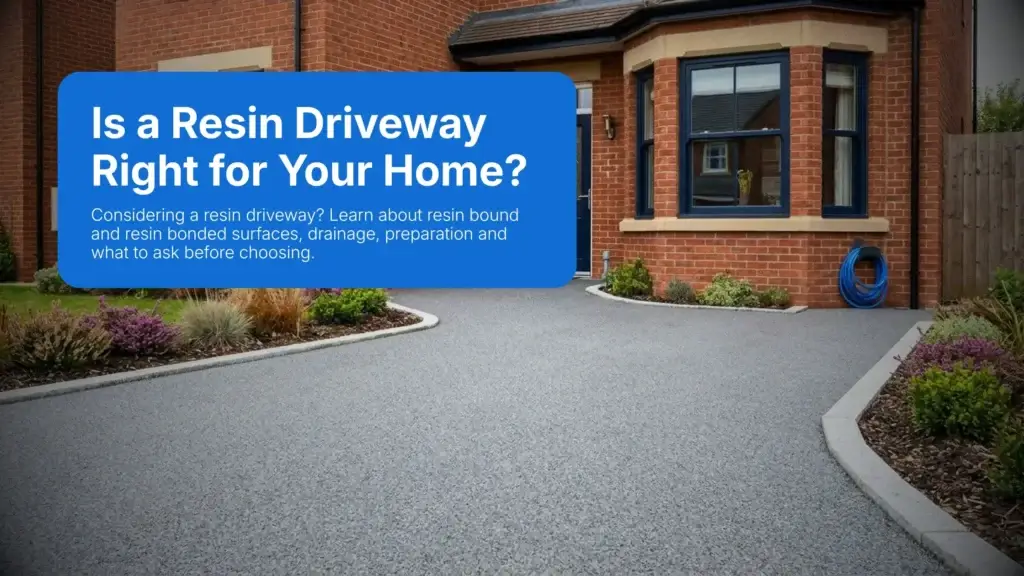
A new driveway is about more than improving the front of a property. It needs to work for everyday parking, suit the style of the home, manage rainfall sensibly and be built on a properly prepared base.
Resin is a popular option because it can create a smooth, contemporary finish with a wide choice of aggregate colours. But “resin driveway” is a broad term. Before choosing one, it is important to understand the difference between resin bound and resin bonded surfacing, how drainage affects the design and why the work below the finished surface matters just as much as the appearance above it.
What is a resin-bound driveway?
A resin-bound surface is made by mixing dried aggregate with resin before it is laid over a suitable base. The finished surface is smooth underfoot and has small gaps between the stones, allowing water to pass through when the whole construction is designed as a permeable system.
That can make resin bound an attractive choice for homeowners who want a clean, modern finish and are considering how rainwater will be managed.
However, permeability is not simply a property of the top layer. The base, sub-base, ground conditions, levels and drainage route all matter. A surface cannot be described as a complete drainage solution without considering where the water goes after it passes through.
Resin bound and resin bonded are not the same thing
This is one of the most important questions to ask during the quotation stage.
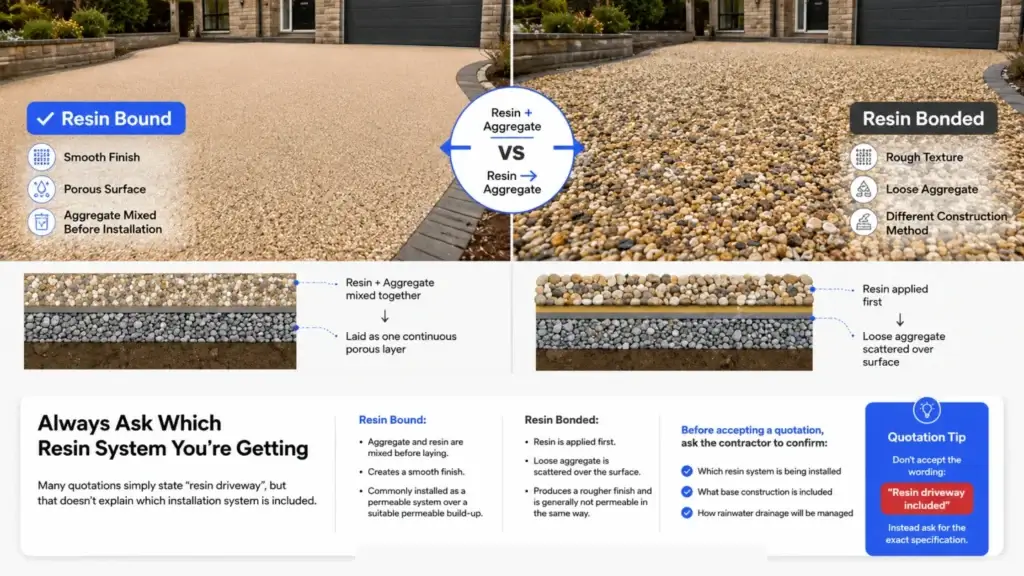
With resin bound, aggregate and resin are mixed together before laying. With resin bonded, resin is applied to a base and loose aggregate is scattered on top. The finishes can look similar in photographs, but they perform differently.
A resin-bound system is commonly chosen for a smooth, porous finish when installed over a suitable permeable build-up. Resin-bonded surfacing usually has a rougher texture and is generally not permeable in the same way.
Do not rely on a short phrase such as “resin driveway included” in a quote. Ask the contractor to state exactly which system is proposed, what base it will be laid on and how surface water will be managed.
What are the potential benefits of resin?
A well-designed resin-bound driveway can offer:
- A neat, seamless appearance
- A broad choice of aggregate blends
- A surface without loose gravel underfoot
- A finish that can complement modern or traditional homes
- Potential drainage benefits when the full construction is suitable
The visual flexibility is a major appeal. Homeowners can select subtle greys, warm stone tones or blends that work with brickwork, render, paths and borders. A resin surface can also be used to connect a driveway, path and entrance area into one considered design.
The right material depends on the property, not only current trends. A driveway should suit the number and weight of vehicles, turning movements, existing levels, drainage needs, access and maintenance expectations.
Why preparation matters:
The most attractive resin surface can fail early if the base beneath it is unsuitable. Cracks, movement, poor compaction and incorrect levels can affect the finished driveway over time.
Before any final surface is considered, the installer should assess the existing area and determine whether the current base is suitable, needs repair or needs a full excavation and rebuild. This is not unnecessary extra work; it is often what determines whether the driveway remains even and functional.
A clear quotation should explain:
- Whether the existing base will be retained or removed
- The proposed sub-base and depth
- How the area will be compacted
- How edges will be restrained
- How water will drain away from the property
- What happens around manholes, drains and thresholds
- Whether access, waste removal and reinstatement are included
Does a resin driveway need planning permission?
Planning requirements depend on the property and how rainwater is handled. In England, a new or replacement front driveway using permeable surfacing, or directing water to a suitable permeable area within the property, will generally not require planning permission. Traditional impermeable surfacing over five square metres without appropriate drainage generally does require it.
The rules can be affected by property-specific restrictions, conservation areas and other local considerations. It is sensible to check before work begins rather than assume.
LINK: Planning Portal guidance on paving front gardens
Is resin the right choice for every driveway?
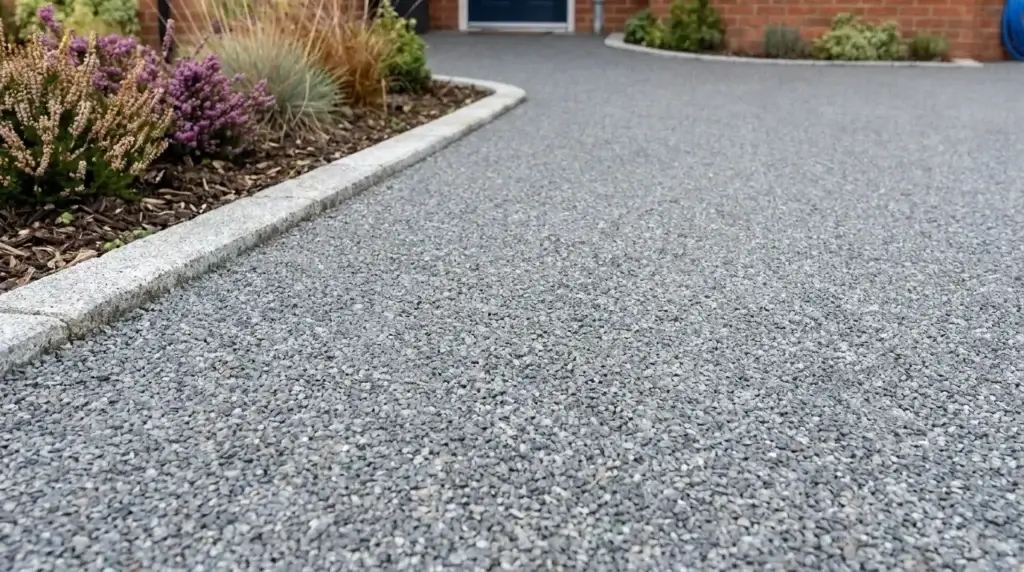
Not always. Block paving may suit homeowners who want a traditional pattern or the ability to lift and reinstate smaller areas in future. Tarmac driveway may suit a straightforward, practical surface. Resin may suit homeowners looking for a smooth contemporary finish where the base and drainage plan are appropriate.
The best option comes from understanding the site first. A reliable contractor should explain the trade-offs rather than present one material as right for every home.
Questions to ask before choosing a resin driveway
Before accepting a quote, ask:
- Is the system resin bound or resin bonded?
- Is the existing base suitable for the proposed work?
- How will water be directed away from the home?
- What preparation and edging are included?
- Is the quote a fixed quote or an estimate?
- What is included for waste removal and access?
- What care or maintenance will the driveway need?
A written scope makes it easier to compare quotations fairly. Citizens Advice recommends obtaining written quotes and ensuring the agreed work, materials, timings and payments are clear. Citizens Advice guidance
Choosing with confidence
A resin driveway can be an excellent option when it suits the property and is built on the right foundation. The key is not to choose based solely on a finished photograph or the lowest headline price. Ask about the preparation, the material system and the drainage plan.
For homeowners in Darlington, County Durham and the wider North East, Roofs and Drives LTD can discuss resin driveways, drainage, preparation and alternative surfacing options in plain English.