High winds coming off the North Sea don’t ask permission. Every autumn and winter, storms lift tiles, loosen ridge lines and rip felt off flat roofs across Darlington, Teesside and the coast. This guide explains exactly what to do in the first hour, the first day and the first week after storm damage — and how to avoid the rogue traders who follow bad weather around.
The first hour: stay safe and stop the water
- Stay off the roof. Wet tiles, gusty wind and hidden damage make roofs lethal for anyone without the right equipment. Assess from the ground only.
- Contain leaks inside. Buckets under drips, furniture and electricals moved clear. If a ceiling is bulging with water, pierce it with a screwdriver over a bucket — a controlled release beats a collapsed ceiling.
- Kill power to affected circuits if water is anywhere near light fittings or sockets.
- Check from the ground and note what you see: tiles in the garden, gaps on the roofline, sagging gutters, daylight visible in the loft.
If water is coming in right now, call us on 01642 901293 — our emergency roof repair service prioritises make-safe visits across Darlington and Teesside so a bad night doesn’t become a ruined ceiling, saturated insulation and a much bigger bill.
The first day: document everything for your insurer
Most buildings insurance covers storm damage, and insurers expect two things from you: evidence, and reasonable steps to prevent further damage. Before anything is repaired or tidied away:
- Photograph everything from the ground — the roof, fallen tiles or debris, and any internal damage (ceilings, walls, carpets), with your phone’s date stamp on;
- Keep damaged materials rather than binning them until the claim is agreed;
- Note the date and rough time the damage happened — insurers cross-check against Met Office weather data;
- Get a written report from a roofer describing the cause and the repair needed. We provide this as standard, in a format insurers accept.
One honest note: check your policy excess first. If the fix is a couple of slipped tiles, paying directly is often cheaper than claiming and affecting your premium.
What storm damage actually looks like in the North East
After ten storms you see the same failures again and again on North East homes:
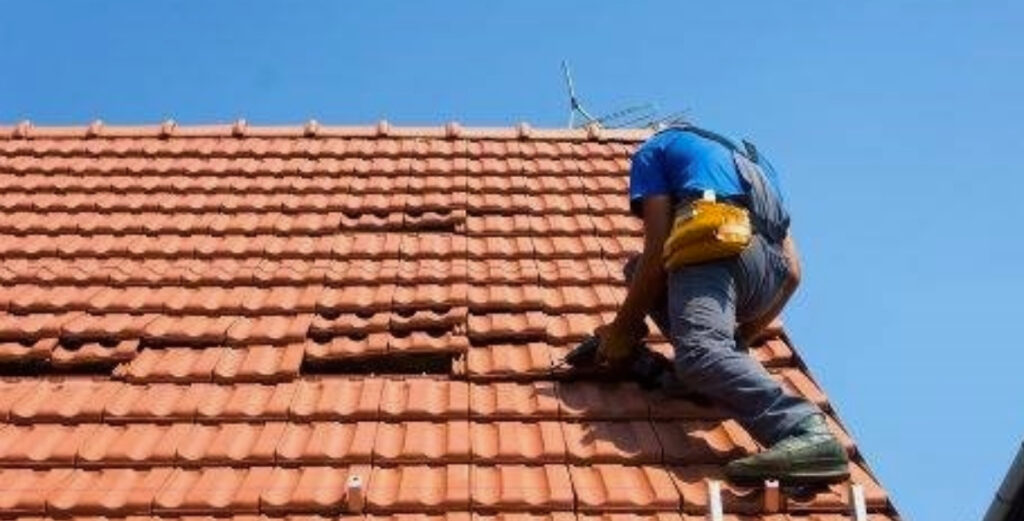
- Slipped and missing tiles or slates — the most common, especially on older roofs where nail fixings have corroded;
- Ridge tiles worked loose — traditional mortar-bedded ridges fail gradually with freeze-thaw, then a storm finishes the job. A dry ridge system fixes this permanently, with no mortar to fail;
- Flashing lifted around chimneys — lead flashing peels back in high wind and lets water track down the chimney breast;
- Flat roof felt ballooned or torn — garage and extension roofs take the worst of it;
- Gutters and fascias pulled away — wind-loaded gutters lever their fixings out of tired fascia boards. If yours are original timber, see our fascias, soffits and guttering service.
Coastal homes in Hartlepool and Redcar get the harshest treatment — salt air corrodes fixings faster and wind speeds run higher. It’s why we build coastal roofs with mechanically fixed ridge and verge systems rather than mortar.
Temporary fix vs proper repair
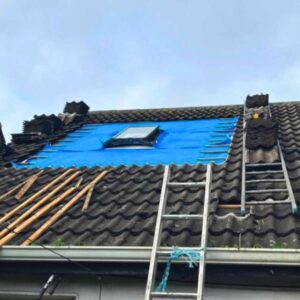
A make-safe visit (secure sheeting or a temporary patch) stops the damage getting worse — but it is not the repair. The proper fix comes after the weather clears: matching tiles sourced, flashing re-dressed, ridges re-fixed. Beware anyone offering to “fully repair” a roof from a ladder in a gale. Our roof repair team quotes the permanent work in writing before it starts, and if the damage tips the balance towards re-roofing, we’ll show you the evidence and the numbers for both options — see our new roof installation page for what’s involved.
Avoiding storm-chasing rogue traders
Every major storm brings vans knocking on doors offering cheap, immediate roof repairs. Some are genuine; many are not. Simple protection:
- Never agree to work sold at your door with pressure to decide today;
- Ask for a written quote with a company name, address and company number you can check on Companies House;
- Check their reviews on Google — a real local firm has a track record you can read;
- Never pay cash up front. We don’t take a penny until the work is done and you’re happy — that’s our standard policy, storm or no storm.
Frequently asked questions
Will my insurance cover storm damage to my roof?
Usually yes, if the damage was caused by a defined ‘storm’ (insurers generally use wind speeds around 47mph+ as a benchmark) and the roof was in reasonable condition beforehand. Wear-and-tear is not covered — which is why an honest condition report matters.
How quickly can you make my roof safe?
Emergency calls jump our queue and we aim for same-day attendance across Darlington and Teesside wherever possible. Call 01642 901293 — we’ll give you an honest arrival window, not a promise we can’t keep. Details on our emergency roof repairs page.
Should I get my roof checked before winter?
If your roof is over 15 years old, or you’ve noticed slipped tiles, moss build-up or crumbling ridge mortar, a pre-winter check is far cheaper than a mid-storm emergency. We do free roof surveys across the North East — book one here.
Roofs & Drives Ltd repairs and replaces roofs across Darlington, Newton Aycliffe, Stockton-on-Tees, Middlesbrough, Hartlepool and the wider North East — see all areas we cover.
Related guides
- Signs you need a new roof — spot the warning signs early.
- New roof cost in Darlington — what a replacement typically costs.
- Emergency roof repairs — 24/7 help when a roof fails.